



Clinico Pathological Corelation at BGS Medical College and Hospital, Nagarur


Formal Report: Clinicopathological Case Discussion (CPC)
Date: January 27, 2026
Time: 2:00 PM
Venue: MEU Hall, BGS MCH
Departments involved: Pediatrics and Pathology
Introduction
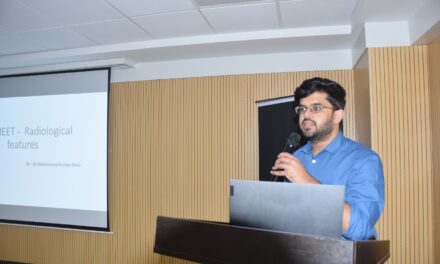
The Departments of Pediatrics and Pathology conducted a collaborative Clinicopathological Case Discussion focusing on two complex pediatric presentations. The session was presided over and mentored by Dr. ATK Rau (Professor, Dept. of Pediatrics) and Dr. Aarthi Rau (Professor, Dept. of Pathology). The objective was to highlight the necessity of interdisciplinary correlation in reaching definitive diagnoses for rare conditions.
Event Proceedings
Case I: Generalized Anasarca in a 10-Year-Old Boy
Presented by Dr. Aditi G (SR, Dept. of Pediatrics) and Dr. Seema (AP Dept. of Pathology)
• Clinical Presentation: The patient presented with severe anasarca (generalized edema). Initial clinical suspicion pointed toward Protein-Losing Enteropathy (PLE) due to significant protein loss.
• Investigation: Comprehensive evaluation was performed using endoscopic imaging and histopathological analysis of intestinal biopsies.
• Diagnosis: The correlation of endoscopic findings with histopathology confirmed a diagnosis of Primary Intestinal Lymphangiectasia (PIL), also known as Waldmann’s Disease.
Case II: Infantile Anemia with Progressive Jaundice
Presented by Dr. Shagufta P (SR, Dept of Pediatrics) and Dr. Harshitha (AP, Dept of Pathology)
• Clinical Dilemma: An infant presented with anemia and a gradual increase in jaundice.
• Diagnostic Conflict: * Peripheral Smear: Indicated hypoproliferative anemia, typically suggesting low bone marrow output.
o Bone Marrow Aspirate: Paradoxically revealed erythroid hyperplasia, a sign of overactive red cell production.
• Pathophysiological Conclusion: This discrepancy is a hallmark of Ineffective Erythropoiesis, where red blood cells are produced but destroyed before or shortly after entering circulation.
• Final Diagnosis: The findings suggested Sideroblastic Anemia, which showed a positive clinical response to Pyridoxine (Vitamin B6).
Key Observations and Discussion
The session concluded with a robust discussion on the technical and clinical challenges faced in pediatric diagnostics:
• Interdepartmental Correlation: Both cases demonstrated that neither clinical signs nor laboratory data are sufficient in isolation; a final diagnosis requires the “bridge” between bedside observation and microscopic evidence.
• Pediatric Sampling Challenges: The presenters highlighted the difficulties inherent in obtaining adequate tissue and fluid samples in pediatric patients, which can often lead to diagnostic delays or dilemmas.
• Ineffective Erythropoiesis: Case II served as a vital academic reminder that a “hypoproliferative” peripheral picture does not always equate to a “hypoplastic” bone marrow.
Conclusion
The meeting was highly informative, providing residents and faculty with deep insights into the management of rare gastrointestinal and hematological disorders. The guidance of Dr. ATK Rau and Dr. Aarthi Rau ensured a high level of academic rigor throughout the proceedings.